The series on Bible study continues with the emphasis on interpreting the Bible in its own context.
The context we’re discussing is the world of the ancient Near East (with respect to the OT) and the Second Temple period (with respect to the NT). Interpreting the Bible in these contexts means thinking like a person living at these times. The best way to do that is to immerse yourself in the worldview of the civilizations of these eras with which the biblical writers had regular contact. That is accomplished by immersion in the written sources of these civilizations. The last post of the series dealt with the need to tap into the written material of the ANE since that is the context for the OT. In this material we’ll turn attention to the NT context, the Second temple period (6th century BC-1st century AD).
Core idea
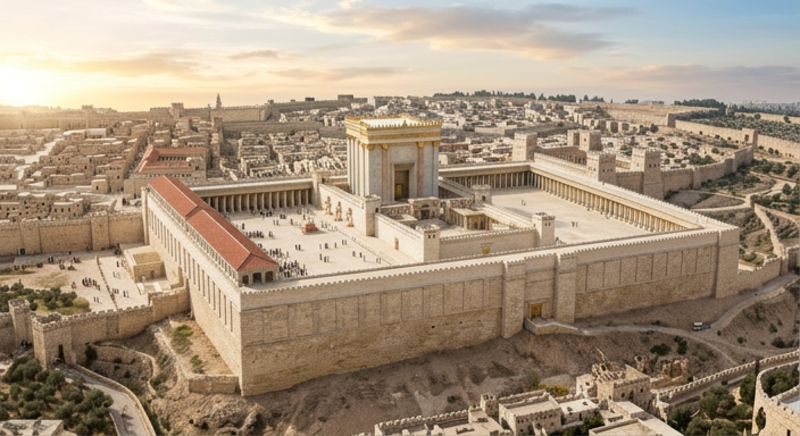
Biblical interpretation improves when readers immerse themselves in the writings and worldview of the cultures that shaped biblical authors. For the New Testament, that context is the Second Temple period, broadly the sixth century BC through the first century AD, centered historically on the Jerusalem temple rebuilt after exile and destroyed in AD 70.
What counts as Second Temple literature
Much of the relevant material is non-biblical Jewish literature, not merely the biblical books written during the era. Major bodies of texts include:
- Apocrypha / Deuterocanonicals: Works such as 1–2 Maccabees, Tobit, Sirach, Wisdom literature, additions to Daniel, and the Prayer of Manasseh. Protestants commonly call these “Apocrypha,” while Catholics recognize some as deuterocanonical.
- Pseudepigrapha: Texts such as 1 Enoch, Jubilees, the Letter of Aristeas, and Joseph and Aseneth. The label refers to works attributed to figures who did not actually write them; it does not simply mean “false writings.”
- Dead Sea Scrolls: Both biblical manuscripts and, more importantly for worldview studies, non-biblical texts associated with the Qumran community and broader Jewish circulation.
- Josephus and Philo: Essential first-century Jewish writers. Josephus supplies historical accounts and defenses of Judaism; Philo is especially significant for allegorical interpretation and his discussion of the logos.
Why these texts matter
These writings were influential in Jewish and early Christian settings, including the world shared by New Testament authors. They help modern readers recognize the concepts, questions, and assumptions that ancient audiences brought to Scripture, including points where biblical writers agreed with or deliberately differed from their surrounding culture.
Recommended English resources
The transcript recommends modern printed or digital translations where possible:
- Apocrypha: NRSV / New Oxford Annotated Apocrypha; KJV Apocrypha.
- Pseudepigrapha: James H. Charlesworth’s two-volume Old Testament Pseudepigrapha as the leading academic collection.
- Dead Sea Scrolls: Wise, Abegg, and Cook’s The Dead Sea Scrolls: A New Translation; Vermes’s The Complete Dead Sea Scrolls in English; García Martínez’s translation. For biblical scrolls, The Dead Sea Scrolls Bible.
- Josephus: Updated Whiston editions or Paul Maier’s The New Complete Works of Josephus.
- Philo: Yonge’s The Works of Philo, updated by David Scholer.
Free websites can provide access, but their translations are often incomplete or dated because they rely on public-domain editions. The central recommendation is to read these sources directly, alongside reliable scholarly guides, to interpret the Bible more faithfully in its original historical setting.