What Genesis Six Actually Teaches
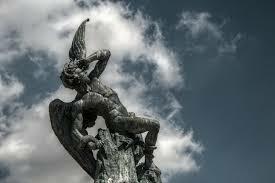
What Genesis 6 Really Teaches
Genesis 6 is one of the most debated and misunderstood passages in all of Scripture. Who were the "sons of God"? What were the Nephilim? And why does any of this matter for Christians today? These questions deserve careful, honest answers rooted in the biblical text and the witness of the early church.
Why Does Mount Hermon Matter in the Bible?
Mount Hermon is the highest peak in the Levant, rising about 9,200 feet above sea level. It dominates the Golan Heights on the border between Israel and Syria and has been considered a sacred site by nearly every civilization that lived near it, stretching back to the Old Babylonian period, roughly two millennia before Christ.
In the ancient Gilgamesh story, dated around 1800 BC (the era of Jacob and Joseph), Hermon and Lebanon were called "the secret dwelling of the Anunnaki," the chief gods of the Sumerian people. The very name "Hermon" appears to be rooted in a word meaning "taboo," closely related to the Hebrew concept of being "devoted to destruction."
This is the same language used in Exodus 22:20 (ESV): "Whoever sacrifices to any God, other than the Lord alone, shall be devoted to destruction." Every tribe Joshua faced when entering the promised land was associated with this place and this condemnation. And notably, every one of those tribes was known as a tribe of giants.
What Does Genesis 6 Actually Say?
The key passage is Genesis 6:1-4 (ESV):
"When man began to multiply on the face of the land and daughters were born to them, the sons of God saw that the daughters of man were attractive. And they took as their wives any they chose. Then the Lord said, 'My Spirit shall not abide in man forever, for He is flesh: His days shall be 120 years.' The Nephilim were on the earth in those days, and also afterward, when the sons of God came in to the daughters of man and they bore children to them. These were the mighty men who were of old, the men of renown."
Two questions immediately arise: Who are the "sons of God," and what does "Nephilim" actually mean?
What Does "Nephilim" Really Mean?
Many people assume Nephilim comes from the Hebrew word naphal, meaning "to fall," and therefore means "fallen ones." But this does not hold up under scrutiny.
By the rules of Hebrew word formation, deriving "Nephilim" from naphal would require a noun form that simply does not exist in the Hebrew language. The spelling does not support the translation "fallen ones," "those who fall," or "those who fall away." Each of those meanings would require a different spelling entirely.
However, an Aramaic noun does exist that means "giant." And when seventy Jewish elders translated the Hebrew scriptures into Greek (the Septuagint), the word they chose was gigantes, meaning giant. The evidence strongly points to Nephilim meaning giants, not fallen people.
Were the "Sons of God" Just the Descendants of Seth?
A popular interpretation, sometimes called the "Sethite view," argues that the "sons of God" were simply the godly male descendants of Seth, and the "daughters of man" were the wicked female descendants of Cain. This view is held by some well-known theologians, but it raises serious problems.
- How likely is it that every man from Seth's line was righteous while every woman from Cain's line was wicked?
- What happened when Canaanite men married Sethite women? The argument ignores this entirely.
- If these were simply two groups of human beings intermarrying, why would their children be giants?
- Why would these unions produce wickedness so severe that God chose to destroy nearly all life on earth?
- Every other use of the phrase "sons of God" (Beni Elohim) in the Hebrew scriptures refers to divine beings, not human descendants.
The Sethite view cannot answer these questions satisfactorily.
Can Angels Interact Physically with Humans?
Some argue that angels are incapable of physical interaction with human beings, often citing Matthew 22:30 (ESV): "For in the resurrection they neither marry nor are given in marriage, but are like angels in heaven."
But notice what this verse does not say. It does not say angels cannot do this. It says they do not, in the context of the resurrection and in heaven. The fall described in Genesis 6 happened on earth, before the resurrection. There is a significant difference between "cannot" and "does not."
Throughout Scripture, divine beings eat, drink, wrestle, and engage physically with humans. The men who visited Lot in Sodom were nearly assaulted by the crowd. These are not abstract spiritual interactions.
What Do Peter and Jude Say About the Fallen Angels?
The New Testament provides important confirmation. 2 Peter 2:4 (ESV) states: "For if God did not spare angels when they sinned, but cast them into hell and committed them to chains of gloomy darkness to be kept until the judgment."
The Greek word translated "hell" here is actually Tartarus, a term used nowhere else in the New Testament. In Greek understanding, Tartarus was not simply the place of the dead. It was as far below Hades as Hades is below the surface of the earth. It was the lowest possible place of confinement. Under the inspiration of the Holy Spirit, Peter chose this specific word to describe where these angels were sent.
Jude 6-7 (ESV) adds: "And the angels who did not stay within their own position of authority, but left their proper dwelling, he has kept in eternal chains under gloomy darkness until the judgment of the great day, just as Sodom and Gomorrah and the surrounding cities, which likewise indulged in sexual immorality and pursued unnatural desire, serve as an example by undergoing a punishment of eternal fire."
Jude directly links the sin of these angels to sexual immorality, just as Sodom and Gomorrah. Crossing the boundary between the supernatural and the human is treated with the same gravity as other severe sexual transgressions.
What Happened at Mount Hermon According to Ancient Sources?
The extra-biblical books of 1 Enoch and Jubilees, while not Scripture, provide historical context that the early church was familiar with. According to 1 Enoch, 200 supernatural beings descended on Mount Hermon, led by a figure whose name combines words meaning "name" and "rebellion." Knowing they might regret their choice, their leader made them all swear an oath together so that none could escape the guilt alone.
In exchange for physical relations with human women, these beings offered forbidden knowledge: charms, enchantments, astrology, metallurgy, weapons of warfare, and other things. This mirrors the false gift offered in Eden. The same deceptive pattern appears again.
The offspring of these unions, the Nephilim, were described as giants of insatiable appetite who consumed everything humanity possessed and eventually turned to cannibalism. According to 1 Enoch, this was also a strategic move by the fallen realm to corrupt the human bloodline and prevent the coming of the Messiah.
Where Did Demons Come From?
This is a question the early church took seriously. Until Augustine in the late third and early fourth century, the consistent teaching among church fathers was that demons were the disembodied spirits of the Nephilim.
Philo, an ancient writer, identified the beings in Genesis 6 as those "whom other philosophers call demons." Origen wrote that they were "wicked demons of the race of the Titans or giants." Justin Martyr stated plainly that the angels who were captivated by love of women "begot children who are those called demons."
This explains why demons in the New Testament behave as they do. They have no physical body of their own and desperately seek to inhabit one. They are spirits without a home, which is exactly what you would expect from beings whose physical bodies were destroyed in the flood but whose spirits remained.
What Is the Pattern of Rebellion and Judgment in Scripture?
Across the early chapters of Genesis, a clear pattern emerges. Rebellion leads to judgment. Judgment is followed by more rebellion, which leads to more judgment.
- The first rebellion brought chaos to creation and the expulsion from Eden.
- The watchers descended to Hermon, took human wives, and produced the Nephilim.
- The Nephilim corrupted the earth and God sent the flood.
- After the flood, Babel follows, and the pattern continues.
God's response to each rebellion is decisive judgment. But His redemptive purpose is never derailed. Every attempt by the fallen realm to corrupt or destroy humanity ultimately fails.
Life Application
Whatever position you hold on the specific details of Genesis 6, the larger lesson is clear and urgent. The fallen realm has always worked to corrupt, deceive, and destroy. The same false gifts offered at Hermon, knowledge, power, and pleasure outside of God's boundaries, are still being offered today. And the same God who judged those rebellions is still sovereign over every one of them.
This week, take time to examine where you may be accepting false gifts. Where are you being offered knowledge, comfort, or influence that comes with strings attached and leads away from God rather than toward Him?
Ask yourself:
- Am I willing to study Scripture carefully and honestly, even when it challenges what I was taught?
- Where in my life am I accepting something that looks like a gift but is actually pulling me away from faithfulness to God?
- Do I trust that God's judgment of rebellion and His protection of His people are both real and active today?
The God who preserved Noah and his family through the flood, who bound the rebellious watchers in the lowest depths, and who never allowed the fallen realm to derail His plan of redemption is the same God who holds your life in His hands. Trust Him. Study His Word carefully. And do not settle for easy answers when the truth requires more of you.